
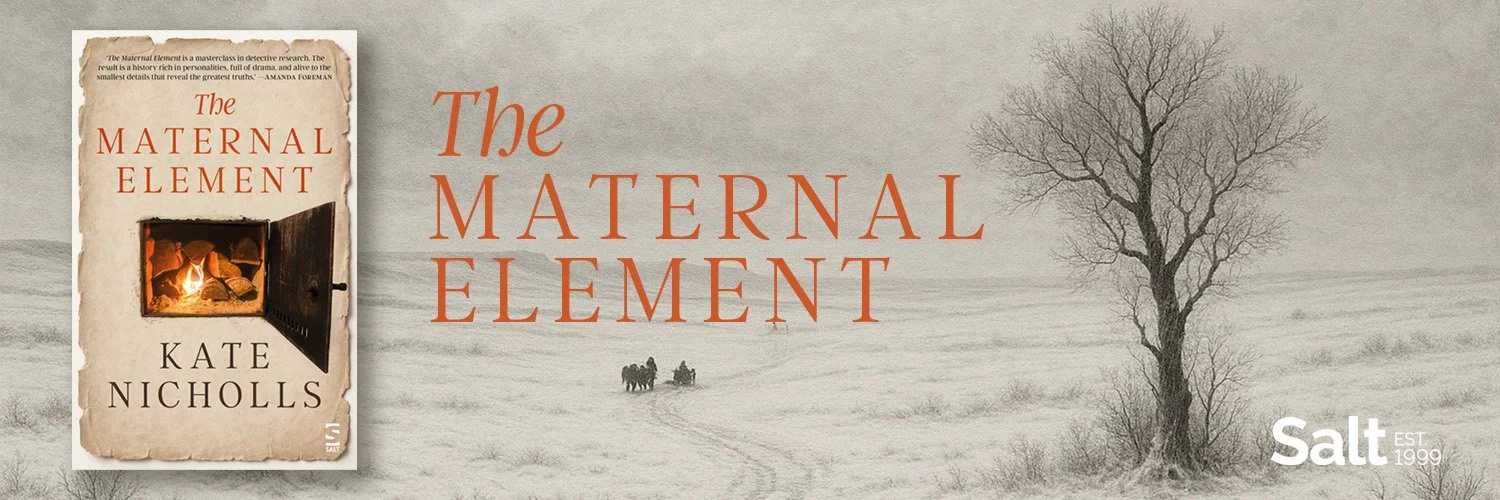
The Maternal Element is a sweeping, family epic and an intimate portrait of an extraordinary woman forgotten by history. Self-educated, Maria Mendeleeva – mother of Dmitri Mendeleev who devised the Periodic Table – marries at sixteen. Together the radical Mendeleevs strive against the strictures of the time while raising a large family and confronting seemingly insurmountable odds. On the brink of poverty, her family’s only hope, Maria brings her grandfather’s glass factory back to life and undergoes a personal transformation. The ripple effects of the choices she makes reach far into the future.
The Maternal Element is a manifesto for truth, female empowerment and defying societal expectations.
Praise for this Book
‘Four great historical novels to read in June Rich in detail and drama, The Maternal Element resurrects in colourful prose the life of a remarkable, undeservedly forgotten woman.’ —Nick Rennison, The Sunday Times
‘The Maternal Element is a masterclass in detective research. The result is a history rich in personalities, full of drama, and alive to the smallest details that reveal the greatest truths. In Nicholls’s hands, Maria Mendeleeva is revealed for the first time as a force in her own right – the invisible element in her son Dmitri Mendeleev’s periodic table.’ —Amanda Foreman
‘Simply put: this is a brilliant and entrancing novel. I could not put it down.’ —Erica Wagner
‘I was transported to a Russia in better times, when despite the poverty and contrasting opulence of the court there was freethinking, high culture and peasant nobility. Cleverly imagined, beautifully voiced and written.’ —Allan Mallinson
‘I lapped it up over three days. The story of an extraordinary mother of a large family in Russia living before the Revolutions, told with love and flair by another mother of a large family. A wonderfully researched and heart-felt read.’ —Jeremy Irons
‘At the heart of Kate Nicholls’ vivid realisation of 19th-century Russia is a remarkable woman. A born writer with a finely tuned ear for dialogue and a graphic sense of the historical moment, Kate is as comfortable rendering the household of Maria Mendeleeva – the maternal element – as in articulating the crucible of ideas that helped create one of the greatest scientists in history.’ —Alan Samson
‘The great virtue of the book is the mastery of language, and the wonderful prose-poetic imagery, and the vivid picture we gain of everyday life in Russia / Siberia.’ —Richard Dawkins
‘This was the perfect book to take on holiday.Ms.Nicholls provides a rich historical background and a growing sense of the cultural/political upheavals to come.The landscapes are fantastic, filmic, and I felt as if (like in film) I really was there.Front and foremost for me was the extraordinarily resilient, and brilliant, Maria Mendeleeva, surrounded by the tribe of her husband and family, and her absolute refusal to accept defeat, despite being buffeted by a clutch of catastrophes, in her personal and professional life.Every character is beautifully delineated, and I could not help but care fiercely about what happened to each and every one.’– (Reader’s review)
‘I couldn’t recommend this book more! Beautifully written, it tells the story of a remarkable woman muddling through the highs and lows of life while raising, strong, compassionate children, surrounded by good, loving men. It’ll break your heart but in the best way possible!’ (Reader’s review)
Other books by Kate Nicholls
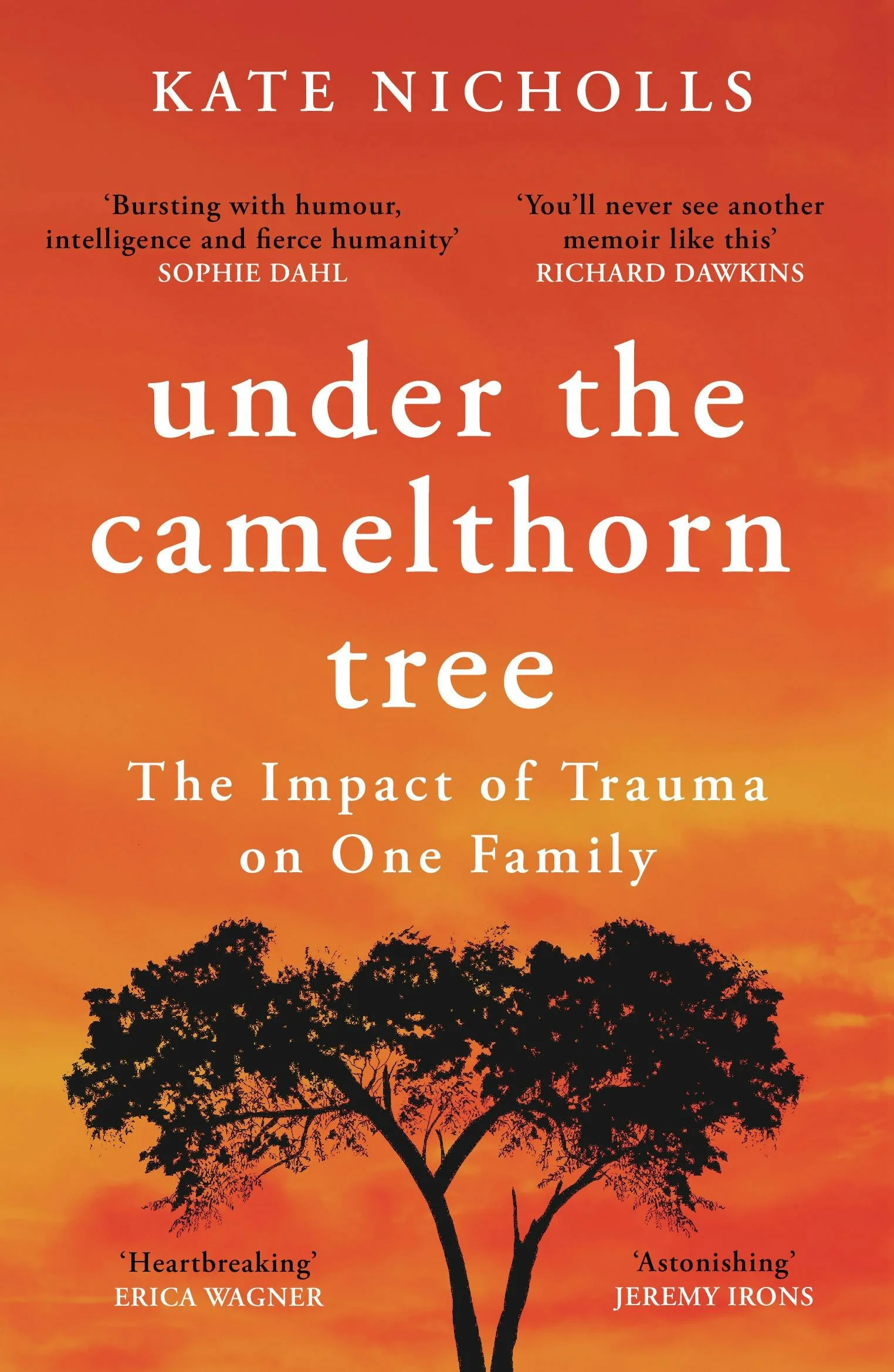
Under the Camelthorn Tree (2019)
Bursting with humour, intelligence and fierce humanity, Under the Camelthorn Tree takes you on a breathtaking journey: anthropological and personal. It is an unflinchingly brave, generous book filled with the wisdom of one who has seen both the beauty and the darkness the world has to give - Sophie Dahl
A sort of Life Force personified, a whirlwind of love and motherhood and science; beautiful woman, brutally true, impossibly brave, impossibly stylish, just plain bloody impossible. Self-taught in science, this poet of the Okavango home-schooled - right through to good universities - four remarkable children in a remote camp surrounded by individually known, radio-tracked lions. After tirelessly working to rehabilitate Botswana's rape victims, her own horrific rape and its aftermath threatened to destroy her life and the family idyll but . . . well, read the whole beautiful book to the end. You'll never see another memoir like this (Richard Dawkins)
'Under The Camelthorn Tree is a breathtaking memoir written with an abundance of wit, honesty and love. Over the course of a page I found myself weeping, giggling, inspired, challenged, but never lectured to. Kate's humour is infectious, her honesty and vulnerability emboldening and her language precise in conjuring the sights, sounds and smells of her unique journey' - Harry Michell
I've just read your book and I have to tell you as a fellow non fiction African writer and mum that I have not enjoyed and been as hooked to a book on Africa in years. Congratulations doesn't really cut it. I know what it takes to be so honest in a book and it can't have been easy. I loved it. I read it in the Serengeti where I've just been leading a safari for a couple of weeks and have recommended it to all my guests. (Reader’s review)
A must-read, haunting book.
Kate Nicholls and her five young children, Emily, Travers, Angus, Maisie and Oakley (aged just eleven-months-old) moved to Botswana in 1994. As a biologist, Kate wanted to work with lions and decided that taking the children would broaden their horizons, life in the bush would be harsh, but give them something very few other children ever get to experience, living among wild animals. (Reader’s review)
Kate's homeschooled her children. These four words cannot describe the impact she made on their lives. They have all far exceeded all expectations in their chosen careers. All attended university. All have confidence and abilities that bounce off every page of the book. They all knew how to handle a Land Rover, change a tyre, and from a very early age were able to drive. Tracking and identifying lions were part of their daily lives. (Readers’s review)
There is a very dark side to the book. Kate’s rape and her PTSD. She describes it with brutal honesty and how it affected her for years after she left Botswana and the impact her behaviour, as a result of the rape had on her children. It is part of her story and part of her life. What is more important is that she's written about it, and by writing and sharing this traumatic experience, she might have just helped someone else take that first step towards surviving as well.(Reader’s review)
Our world would be a very dull place without people like Kate Nichols. She left the comfort of her very established life in England to follow a dream; working and studying lions. As a result, her five children were homeschooled under a Camelthorn tree, where they not only had possibly the best education possible but learnt life-lessons that most children nor adults ever get the chance to experience.(Reader’s review)
Book written by Kate’s children Travers, Angus and Maisie McNeice 2002